
Engineering Blog
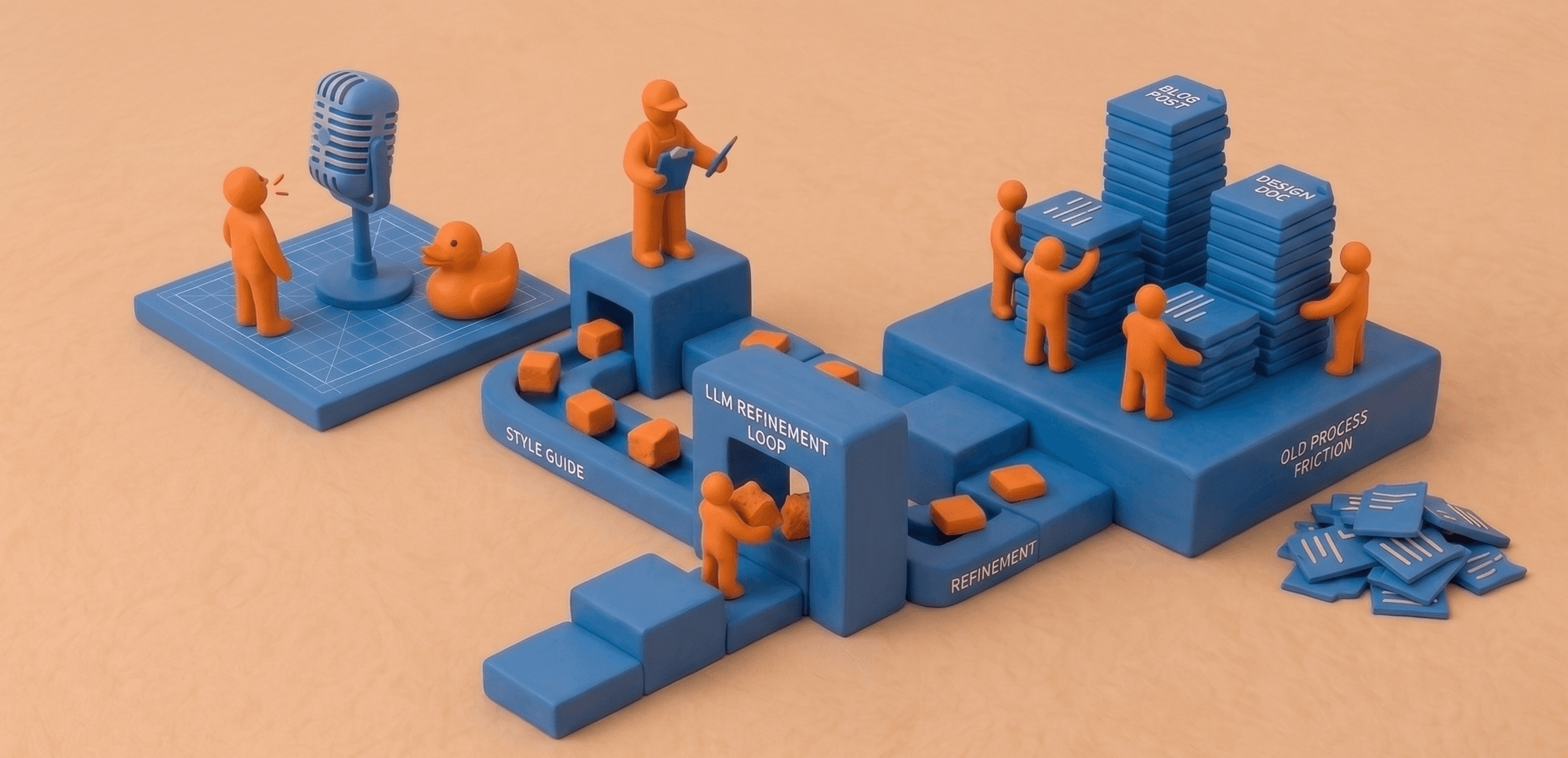
Product Managing the System Around Your Agents
The biggest thing AI changed about building software is cycle time. A feature that used to take a sprint can now take an afternoon. A brand-new project can go from idea to running code in a day. That speed is a genuine gift. It is also the source of a quieter problem. When the cost of producing code drops, the temptation is to skip the practices that used to make code trustworthy. Everyone is excited to build their feature, and everyone assumes they'll clean up later. A develope

Beyond Alerts: Using AI to Continuously Improve Production Systems
Production systems usually receive a serious examination at one of two moments: something breaks and an engineer gets paged, or a monthly or quarterly review reveals that an API has become slower, infrastructure costs have crept upward, or a workflow is no longer performing as expected. Both approaches are reactive. One waits for failure; the other waits for the calendar. In between, a system can quietly become slower, more expensive, or less reliable without crossing a threshold

The Value Framework in Perceptive agents
Part 2 of the Pedestal AI Knowledge Series Abstract In Part 1 we described five common challenges in enterprise AI deployments—reliability, accuracy, performance, cost and "validate"ability—and argued they share a single architectural origin: knowledge is disparate and intertwined with instructions and context, leading to attention dilution. In this second installment we examine four approaches enterprises commonly try to close the gap: long‑context prompts, LoRA‑based fine‑tuni

From "Task"ative agents to Perceptive agents
Part 1 of the Pedestal AI Knowledge Series Abstract Enterprise AI has a stubborn ceiling. Frontier models now handle general tasks with astonishing fluency, yet the agents built on top of them keep stalling at 70–80% accuracy on the operational work that actually runs a business. This is not a model problem; it is a knowledge problem — and specifically a problem of where knowledge lives. This post opens a three-part examination of the gap, beginning with the problem itself. We d